I work with women carrying the weight of being expected to hold everything together, inside their families, their communities, and themselves. Often those obligations predate the woman's own choices, and the strain accumulates in recognisable ways.
There is a kind of exhaustion that isn't quite depression and isn't quite burnout, though it can tip into both. It builds when a woman has spent years placing her own needs in a category labelled "later," a category that never arrives. For South Asian women especially, this pattern often has structural roots. The expectation that a woman will manage the household, maintain the family relationships, moderate her own ambitions to fit available space, and do all of this without visible complaint is a set of conditions that many women grow up inside without being invited to question.
Anxiety often presents as relentless over-functioning. Relationships narrow until certain things can no longer be said at all. Identity questions surface in midlife, or at the point of immigration, when the usual supports are gone and a woman is left asking which parts of herself were chosen and which were assigned. Living between two cultures has its own texture: the original culture continues to exert its expectations from a distance, while the new one offers a different set of assumptions that don't quite fit either. The result is often a persistent sense of not fully belonging in either place.
The pressure to marry, to remain married, and to perform the marriage as successful produces its own strain. It shapes decisions about whether to leave a relationship, whether to speak about what's happening inside one, and whether to seek help at all. The Bangladeshi and broader South Asian context I grew up in assigns a specific weight to a woman's marital status, and I know that weight from the inside.
Single motherhood, by choice or circumstance, carries a different set of pressures again. The practical load is significant. The social dimension, the way communities often position the single mother as a problem to be solved or a cautionary note, adds another layer.
I draw most on Emotionally Focused Therapy, Internal Family Systems, and psychodynamic approaches when working with women on these concerns. IFS is useful for unpacking the internal roles that develop when a woman has spent years managing others: the part that monitors for danger, the part that keeps the peace, the part that has long since stopped asking for things. These parts tend to be active and organised, and naming them gives us something concrete to work with rather than a general sense of overwhelm.
I also pay close attention to what happens in the room when a client talks about family obligation or about the expectations she grew up with. There's often a shift in how she speaks, a change in register, a flatness or speed that tells me we've moved into something that hasn't been examined much. I follow that.
For women working through identity questions specifically, I use narrative therapy alongside the relational work. Which parts of a woman's life story she authored and which were authored for her is a useful question to examine. It often produces a clearer sense of what is hers to keep and what she has been carrying on behalf of someone else. CBT tools come in when anxiety is acute and practical strategies are needed. The work follows what a particular woman, at a particular point in her life, needs.
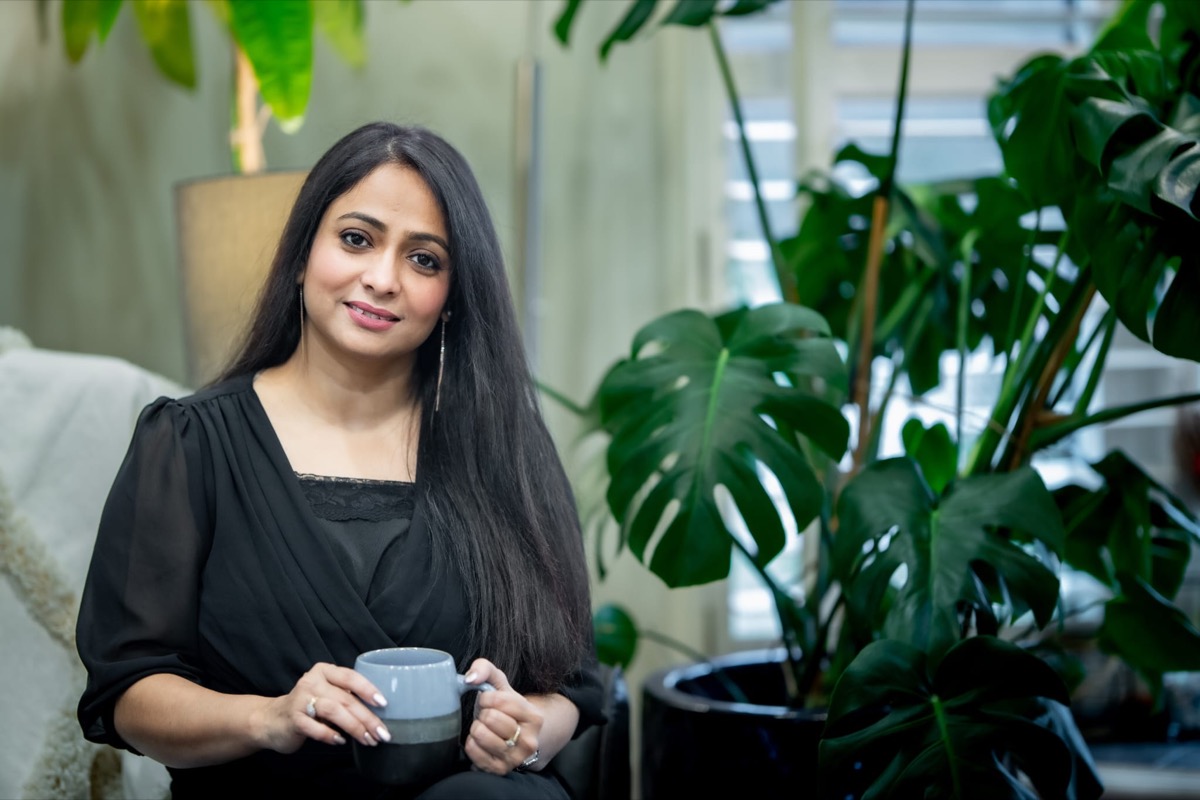
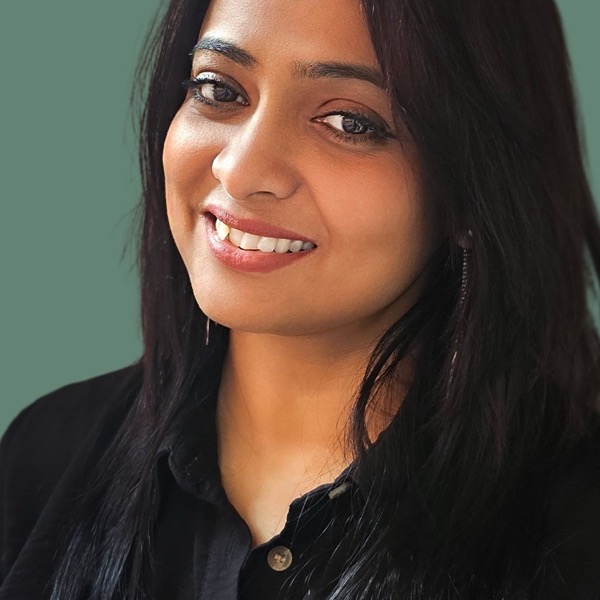
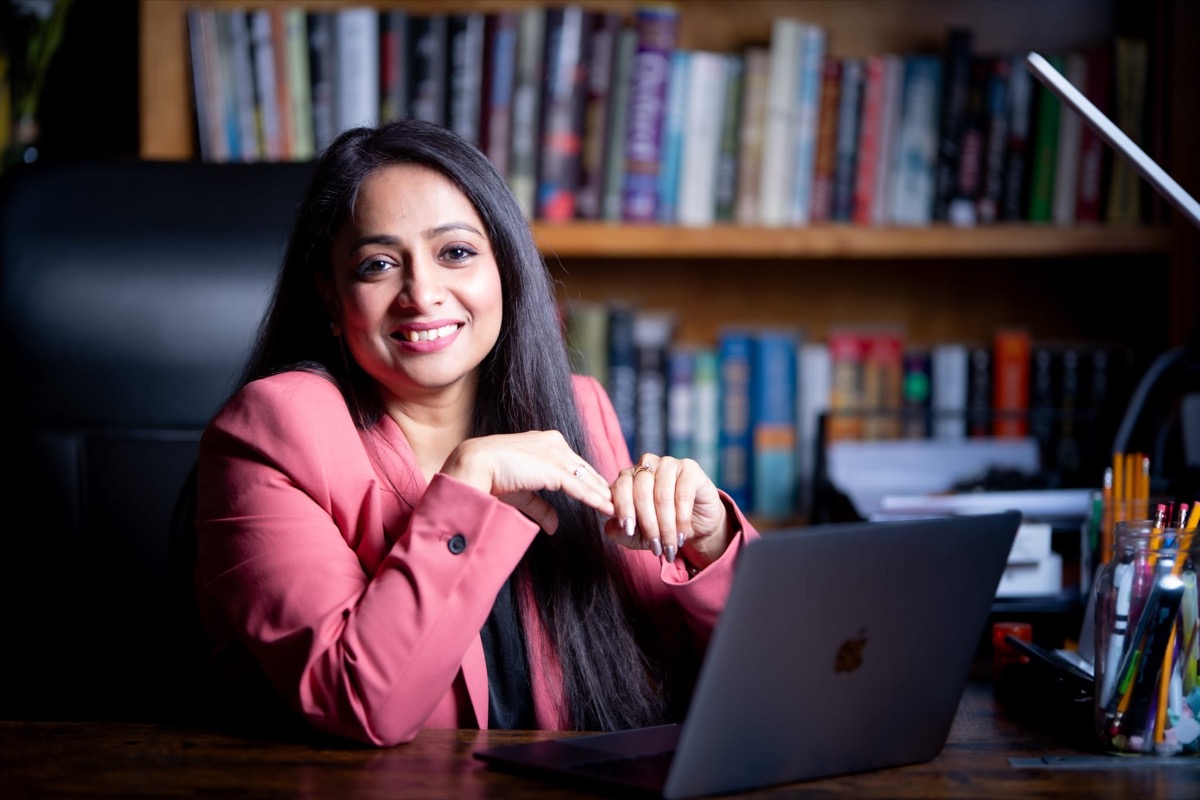
I'm Syeda Zohora, a Registered Psychotherapist (Qualifying), Licence #19673, with an MA in Counselling Psychology from Yorkville University (2025) and a Diploma in Behavioural Science from Seneca College (2022). I'm a member of the Canadian Counselling and Psychotherapy Association. I practise under supervision, as the College requires at the Qualifying stage.
I grew up in Bangladesh and spent more than thirty years in South Asia. Then I immigrated to Canada, and here I became a single mother. I know the load many women carry.
I offer sessions in English, Bengali, and Hindi, in person at my Whitby office and by video or phone across Canada. My practice is oriented toward women dealing with identity, family obligation, relationships, and single parenthood, particularly within South Asian communities, though I work with women from all backgrounds.
Read more about my background and approach →Common patterns are anxiety rooted in the sustained management of multiple obligations, depression that develops when personal wants have been deprioritised over a long period, and relationship difficulties where communication has been shaped by the expectation that certain things shouldn't be said. There's also identity fragmentation that can appear at immigration, at marriage, at the birth of children, or at midlife, any point where the structure of a woman's life changes significantly and the roles she's been playing no longer hold. Being expected to be at once a good daughter, a good wife, a good mother, and increasingly a good professional, without these roles ever visibly conflicting, is costly in specific ways.
Family obligation functions differently from ordinary stress because it tends to be framed as identity rather than demand. When a woman's sense of being a good person is tied to her willingness to put the family's needs above her own, setting any kind of limit feels like a moral failure rather than a practical boundary. Over time, this can produce chronic anxiety, a persistent background monitoring for whether others are satisfied, and a flattened capacity for knowing what she herself wants. The cumulative effect is often more visible from the outside than from within. Many women arrive at therapy describing burnout or relationship trouble before they identify the underlying structure of obligation as a contributing factor.
Single motherhood concentrates the practical and emotional demands of parenting into one person without the distribution of responsibility that a partnership, however imperfect, can provide. The mental load is continuous: there's no one to hand things off to at the end of a hard day, no second income to provide buffer, and often no one to notice when the mother herself is not well. For South Asian single mothers, there's frequently an additional social dimension. The status carries stigma in many communities, which can isolate a woman from the family network that might otherwise be a resource. Therapy offers a space to address both the practical weight and the social dimension, separately and in relation to each other.
Immigration disrupts the entire social infrastructure on which daily life depends: community, extended family, language, routine, the familiar markers of status and identity. For women, this disruption tends to carry additional layers. Childcare, which had relied on proximity to family, suddenly requires a different set of arrangements. The professional credentials and social standing a woman had built may not transfer. The language of emotional life often doesn't translate directly, and the cultural references that would normally allow a woman to speak about difficult things without extensive explanation are no longer shared by the people around her. These conditions make the psychological work of immigration for women different from the version often described in general terms.
Cultural pressure on women is often applied most forcefully at the points where identity is being formed or reformed: adolescence, marriage, immigration, motherhood, and the years after children have grown. The pressure tends to operate through expectations rather than explicit instructions, which makes it harder to identify and examine. A woman who grew up in a Bengali household may have absorbed a clear idea of what kind of woman she should be without that picture ever having been described to her directly. When her life diverges from that picture, the discomfort is real, and it often doesn't resolve by itself. It tends to accumulate until something, a relationship crisis, a period of depression, the disorientation of immigration, creates enough space for the question to surface.
There are several converging reasons. Mental health difficulties are often discussed in South Asian communities as personal weakness or spiritual failing rather than as clinical reality, so acknowledging them carries a cost. The role of caregiver is so thoroughly assigned to women that turning care inward can feel wrong. There's also time: a woman who's managing children, work, and family relationships often has no obvious window in which to attend to her own needs. And there's the question of what help is available. Having to explain the whole cultural context before the problem can be named is a further barrier.
The most important thing is whether the therapist knows the context. Beyond cultural fit, a woman should look for clear credentials, transparency about the therapeutic approach, and a therapist who is direct about what they can and can't help with. The free 15-minute consultation I offer is for this: a chance to judge whether the fit is right before a first session.
I offer in-person sessions at 519 Dundas Street East in Whitby, Ontario. Along the 401, Oshawa and Bowmanville are east of the office; Ajax, Pickering and Scarborough are west. Sessions by video or phone are available across Canada.
Sessions in Bengali and English with a therapist who grew up in Bangladesh and knows the cultural context from the inside.
Therapy for South Asian clients on identity, family obligation, immigration, and living between cultures.
For women at a point where the structure of their life is changing and the person they've been is no longer a sufficient guide.
Anxiety that shows as over-functioning, constant monitoring, or the inability to stop managing.
Depression that develops after years of unaddressed obligation and self-denial.
Relationship difficulties that arise from cultural mismatch, family interference, or years of managed silence.
I work with anxiety, depression, relationship difficulties, and identity questions that arise when a woman is living between two cultures or two sets of expectations. I also work with grief, burnout, the weight of caregiving, and the strain that comes with being a mother without adequate support. For South Asian women specifically, I work with the tension between personal needs and family obligation, marriage pressure, and the cumulative effect of being expected to manage everything without complaint. These compound over time and rarely resolve on their own, because the conditions producing them rarely change.
Yes. I grew up in Bangladesh and came to Canada after more than thirty years in South Asia. That means I know the family structures, the cultural expectations around marriage and motherhood, the intergenerational dynamics, and the way mental health is discussed, or more often avoided, in South Asian households. I work with South Asian women from across the diaspora, including from Bangladesh, India, Pakistan, and Sri Lanka, and with women from other backgrounds.
Yes. I spent more than thirty years in South Asia, immigrated to Canada, and became a single mother here. I know what it is to rebuild a life in a new country, to parent alone, and to carry the expectations of a woman from Bangladesh into a Canadian context.
Yes. I'm a single mother myself, so I know something of what that life involves. The mental load, the lack of backup, the way your own needs sit at the bottom of the list because there is no space, the loneliness of being solely responsible for another person's wellbeing while managing your own. I work with single mothers from all backgrounds. For South Asian single mothers, there's often another layer: the stigma that can attach to that status in the community, the judgement from family, and the sense of having failed some expectation. All of that is part of what we can work with in therapy.
Both. I offer in-person sessions at 519 Dundas Street East in Whitby, Ontario, and sessions by video or phone across Canada. My hours are Monday, Tuesday, Thursday, and Friday from 3 to 9pm, and Wednesday from 12 to 5pm.
Yes. I work in Bengali, English, and Hindi. For many Bengali women, some things are easier to say in Bangla. The emotional vocabulary is different, and the cultural references don't need translating. The way grief, shame, or obligation is described in Bengali doesn't survive intact in English. If you'd like to work in Bengali, or to move between Bengali and English within the same session, that's fine. You don't have to find English words for experiences that happened in a Bengali context.
Individual and couples sessions are $150 per hour. I also offer a sliding scale rate of $135 per hour for clients who need it. If cost is a concern, please mention it when you get in touch and we'll work out something that's manageable. I accept cash, cheque, Visa, Mastercard and PayPal. The free 15-minute consultation, by phone or video, is a chance to ask questions, describe what's brought you here, and decide whether you'd like to proceed.
The starting point is the free 15-minute consultation, a short call where you can tell me what's brought you to therapy, ask anything you'd like to know about how I work, and get a sense of whether we're a good fit. If you'd prefer to go straight to a first session, that's also possible. You can book through the website or contact me by phone or email. I work Monday, Tuesday, Thursday, and Friday from 3 to 9pm and Wednesday from 12 to 5pm. Sessions are in person in Whitby or by video or phone across Canada.
I offer a free 15-minute consultation, by phone or video, where you can tell me what's brought you here, ask anything you'd like to know, and decide whether working together makes sense. I see clients in person in Whitby and by video or phone across Canada, with sessions in Bengali, Hindi, and English.