Trauma therapy in Whitby and across Canada

Trauma has a way of reorganising how the nervous system reads ordinary situations, long after the original event or period has passed. I work with individuals whose past experiences are still shaping their present in ways that feel difficult to understand or control, using approaches that are paced entirely by the person in front of me.

Registered Psychotherapist (Qualifying) Licence #19673 Bengali & English sessions Virtual across Canada In-person, Whitby ON
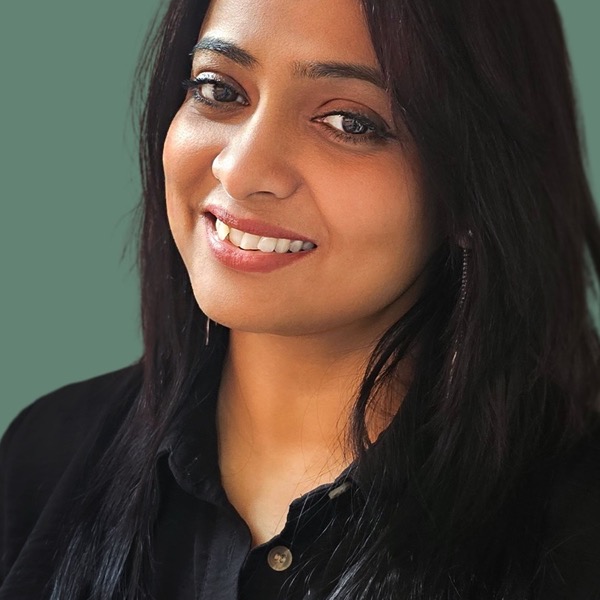
Syeda Zohora, therapist, Whitby

How trauma persists, and why it doesn't always look like what people expect

Trauma is a word that gets used loosely, but its clinical meaning is specific: an experience, or a prolonged set of experiences, that overwhelms the capacity to process and integrate. The result isn't only psychological. The body holds what the mind couldn't fully absorb at the time. Hypervigilance, difficulty with concentration, a persistent sense of threat in objectively ordinary situations, physical tension that has no clear medical explanation , these are among the ways that unprocessed experiences continue to influence daily life years or even decades later. Many people who carry trauma don't recognise it as such because they were never in a war, never experienced a single dramatic event. Trauma doesn't require a particular category of event. It requires that the experience exceeded what the person could integrate at the time it happened.

Complex trauma is different in character from single-incident trauma, and it's worth distinguishing between them. Where a single incident, like an accident or an assault, tends to produce a clear before-and-after, complex trauma develops when difficult experiences are repeated or prolonged across time , often in childhood, often within relationships where there was supposed to be safety. The effects tend to be more diffuse: difficulty with emotional regulation, chronic self-criticism, relational patterns that feel confusing, a fragmented sense of identity. Developmental trauma, which refers to adverse experiences during formative years, often operates this way. People carry it without always having a name for it, and it shapes how they relate to others and to themselves in ways that feel like personality rather than the residue of experience.

In South Asian families and communities, including Bangladeshi and Bengali families, trauma often travels without being spoken. There's a long cultural tradition of endurance , of managing difficulty through silence, of prioritising the family's functioning over any individual's distress. This isn't a failure of care; it's frequently how survival worked across generations that lived through partition, displacement, poverty, or political upheaval. The problem is that silence doesn't dissolve what's been carried. It passes it on. Intergenerational trauma shows up in the children and grandchildren of people who endured things they never discussed, manifesting as anxiety, emotional numbness, relationship difficulties, or a free-floating sense of dread that has no obvious origin in the person's own life. Working with this kind of trauma means understanding both its individual and its historical dimensions.

Cultural trauma adds another layer , the specific grief and disorientation of leaving behind a home, a language, a way of relating to the world. For people who immigrated from South Asia, there can be a persistent sense of incompleteness: the culture of origin no longer fits entirely, and the adopted culture never quite becomes home. This isn't simply adjustment difficulty. For many people, it's a genuine loss that goes unacknowledged because immigration is supposed to represent opportunity and progress. Holding both truths at once, that something was gained and something was lost, is part of what trauma work can make space for.

Trauma work that moves at the pace the work actually requires

I use Internal Family Systems and trauma-focused Cognitive Behavioural Therapy as my primary frameworks for trauma work, and I draw on psychodynamic and narrative approaches where they're most useful. IFS is particularly well-suited to trauma because it doesn't ask anyone to return to painful material before they have the internal resources to do so. Instead, it starts by working with the parts of a person that developed in response to difficulty , the part that stays numb, the part that manages everything, the part that reacts quickly before the thinking mind has a chance to catch up. Building a relationship with those parts, understanding what they've been trying to do, and gradually building internal trust is what creates the conditions for deeper work. There's no forcing, no timeline, and no assumption that going faster is better.

Trauma-focused CBT brings a different but complementary set of tools. It helps identify the beliefs that formed around a traumatic experience, often beliefs about safety, trust, self-worth, or the world's predictability, and examines them carefully. Not to dismiss them , those beliefs made sense in the context that produced them , but to see whether they still fit the person's current life. I pay close attention in sessions to the moments when the body seems to be responding to something that isn't present in the room. That's often where the most useful material is, and it's important to approach those moments slowly, with curiosity rather than urgency.

The first phase of our work together always focuses on stabilisation: building coping capacity, establishing grounding practices, and making sure the person has the internal and relational resources they need before we move toward anything difficult. For some people, stabilisation takes weeks. For others, months. The work in that phase is substantive on its own terms, and it isn't a waiting room before the real work begins. I was born and grew up in Bangladesh, and spent more than thirty years in South Asia before immigrating to Canada as a single mother. I understand firsthand how much a person can carry without showing it, and how much context it takes to understand what any given experience actually cost.

Syeda Zohora

A therapist who understands what it means to carry something across a border

I'm a Registered Psychotherapist (Qualifying), Licence #19673, with an MA in Counselling Psychology from Yorkville University, completed in 2025, and a Diploma in Behavioural Science from Seneca College. I'm a member of the Canadian Counselling and Psychotherapy Association, and I practise under supervision as required at the Qualifying stage of registration , a standard regulatory requirement for early-career practitioners in Ontario, built into the college's licensing framework to support clinical quality.

I grew up in Bangladesh and lived in South Asia for more than thirty years before immigrating to Canada. I came as a single mother, which meant navigating an entirely new country, a different set of institutions and social rules, and the demands of solo parenting, all at once. I'm not drawing on that background to suggest I know what any particular person has been through. Every experience of displacement is its own. What it gives me is a genuine, grounded understanding of how much weight a person can carry while appearing to function normally, and how rarely that weight gets acknowledged in clinical settings that weren't designed with immigrant or South Asian communities in mind.

I offer sessions in Bengali, Hindi, and English. For many of my clients, being able to speak in their first language about things that happened in their first language isn't a convenience. It's a different kind of access entirely. Some things resist translation. I understand that from the inside, not from a textbook.

More about my background and training

In-person in Whitby, virtual across Canada

In-person sessions are available at 519 Dundas Street East, Whitby, ON L1N 2H3, serving clients in Whitby, Oshawa, Ajax, Pickering, Bowmanville, Scarborough, and the wider Durham Region. Virtual sessions by secure video or phone are available to anyone in Ontario or across Canada , many clients find this the most practical option, and the clinical work is no different.

What clients have said

Understanding trauma: a practical guide

What is trauma, and how is it different from a difficult experience?

A difficult experience is something that causes distress at the time and then, over weeks or months, loses its edge. Trauma is different in kind: it's an experience that overwhelmed the nervous system's capacity to process and integrate what happened. The result is that the experience doesn't recede in the normal way. Instead, it remains active, influencing how the nervous system reads subsequent situations, often long after the original circumstances have changed. The defining feature isn't the severity of what happened by any external measure , it's whether the person's system was able to absorb it. The same event can be traumatic for one person and not for another, depending on factors like age, prior experience, available support, and the individual's neurological make-up.

What is complex trauma, and how does it differ from single-event trauma?

Single-event trauma, sometimes called simple or acute trauma, results from a discrete incident: a car accident, a sudden bereavement, a single assault. There's usually a clear before-and-after, and the symptoms tend to cluster around that specific event. Complex trauma develops differently. It results from repeated or prolonged exposure to harmful or threatening situations, often across an extended period of time, often in relationships where there was supposed to be safety. Childhood neglect, ongoing emotional abuse, domestic violence, and repeated exposure to community violence are all examples. The effects of complex trauma tend to be more pervasive and harder to trace to any single source: chronic emotional dysregulation, deeply held beliefs about worthlessness or danger, difficulty trusting others, and a fragmented sense of self that predates any individual incident.

What is intergenerational trauma, and how does it affect people today?

Intergenerational trauma refers to the transmission of the effects of traumatic experience from one generation to the next. It moves through families in several ways: through parenting patterns shaped by unprocessed fear or grief, through the things that are never spoken about and the emotional climate that silence creates, and through epigenetic changes that researchers are still working to fully understand. In South Asian families, particularly those whose histories include partition, migration, or political violence, intergenerational trauma often travels under the name of stoicism or resilience. The person carrying it today may have no memory of, or direct connection to, the original events. What they have is the residue: anxiety that seems disproportionate, a chronic low-level sense of threat, emotional patterns that feel inherited rather than chosen.

How does trauma show up in everyday life?

Trauma shows up in patterns rather than in a single obvious symptom. The nervous system that was shaped by a traumatic experience reads ordinary situations through the lens of that experience, which means it may register threat where there is none, or fail to register safety even when it's genuinely available. Practically, this can look like persistent hypervigilance , a kind of constant scanning that never fully relaxes. It can manifest as emotional numbness, or conversely as emotional reactions that feel too large for the situation. Sleep disruption is common. So are physical symptoms: chronic tension, unexplained pain, a digestive system that seems to track stress with unusual accuracy. Relational difficulties are frequent , difficulty with trust, with conflict, with intimacy, or with situations that require vulnerability. Many people don't connect these patterns to trauma until the connection is made explicitly.

What does trauma-focused therapy actually involve?

Trauma-focused therapy is structured in phases, and the first phase , stabilisation , is typically the longest. Before moving toward anything difficult, the work focuses on building the internal resources that will be needed: grounding practices, emotional regulation skills, an understanding of what the nervous system is doing and why. This isn't a detour before the real work; it's foundational to whether the deeper work is possible at all. Once that foundation is in place, we can begin to approach the traumatic material more directly , gently, at whatever pace maintains safety. This might involve working with the memories themselves, with the beliefs that formed around them, or with the parts of the person that developed to manage them. The aim isn't to erase the past but to change its relationship to the present.

How does IFS approach trauma differently from CBT?

Trauma-focused CBT works primarily with the thoughts and beliefs that formed around traumatic experiences, examining them carefully and gradually updating them in light of present reality. It's structured, evidence-based, and particularly useful for single-incident trauma and for people who find cognitive frameworks helpful. Internal Family Systems takes a different angle. It works with the internal system itself , the different "parts" of a person that developed in response to difficulty. Some parts protect by numbing, some by staying busy, some by anticipating threat at all times. IFS builds a relationship with those parts rather than trying to override them, on the understanding that they developed for good reasons and contain useful information. For complex and developmental trauma, where the nervous system itself has been shaped across a long period of time, IFS often provides access to material that purely cognitive approaches find harder to reach. I use both, often in the same person's work, because they address different aspects of the same underlying difficulty.

How do I know if what I'm carrying is trauma?

There's no diagnostic test, and the question of whether something meets the clinical threshold for trauma is less important than whether its effects are present and persistent. Some indicators worth paying attention to: reactions that seem disproportionate to their immediate cause; a sense that the past is more present than it should be; difficulty feeling settled or safe even in circumstances that are objectively stable; physical symptoms without clear medical explanation; relational patterns that repeat despite genuine efforts to change them; a chronic sense of shame or unworthiness that predates any specific adult experience. If any of that resonates, it's worth exploring. A 15-minute consultation costs nothing and doesn't commit you to anything. It's simply a chance to describe what you're noticing and hear whether trauma-focused work might be relevant.

Frequently asked questions

From people who've worked with me

Common questions about this

From people who've worked with me

"Finding a therapist who speaks Bengali and actually understands what that means culturally is harder than it sounds. I spent years putting this off because I didn't think I'd find someone who got it. Within a few sessions I was covering things I hadn't been able to talk about in English. I recommend Syeda to anyone in the Bengali community who's been sitting on this."

Farida H. · Mississauga

"I'd tried two other therapists before this. Syeda is the first one where I felt like we were actually getting somewhere rather than just talking around things. Three months in, I sleep better than I have in years. The online sessions worked out much better than I expected."

Michael T. · Ajax

"I came in thinking I needed to talk about my relationship. What we actually worked on turned out to be older than that. Six weeks in, things had already shifted. Syeda doesn't rush you but she also doesn't let you go in circles. I hadn't expected to feel any different this quickly."

Priya S. · Scarborough

Common questions about this

What types of trauma do you work with?
Do I need a formal PTSD diagnosis to work on trauma?
What therapeutic approaches do you use for trauma?
How do you work at a pace that feels safe?
Are sessions in person in Whitby or online?
Do you work with intergenerational or cultural trauma?
How much do sessions cost?
How do I book a first session?
Syeda Zohora, Registered Psychotherapist, Whitby Ontario

Let's talk about what you're carrying

A free 15-minute conversation is the first step. It's a chance to describe what's been going on, ask whatever questions you have, and get a sense of whether working together feels right. There's no obligation on either side.