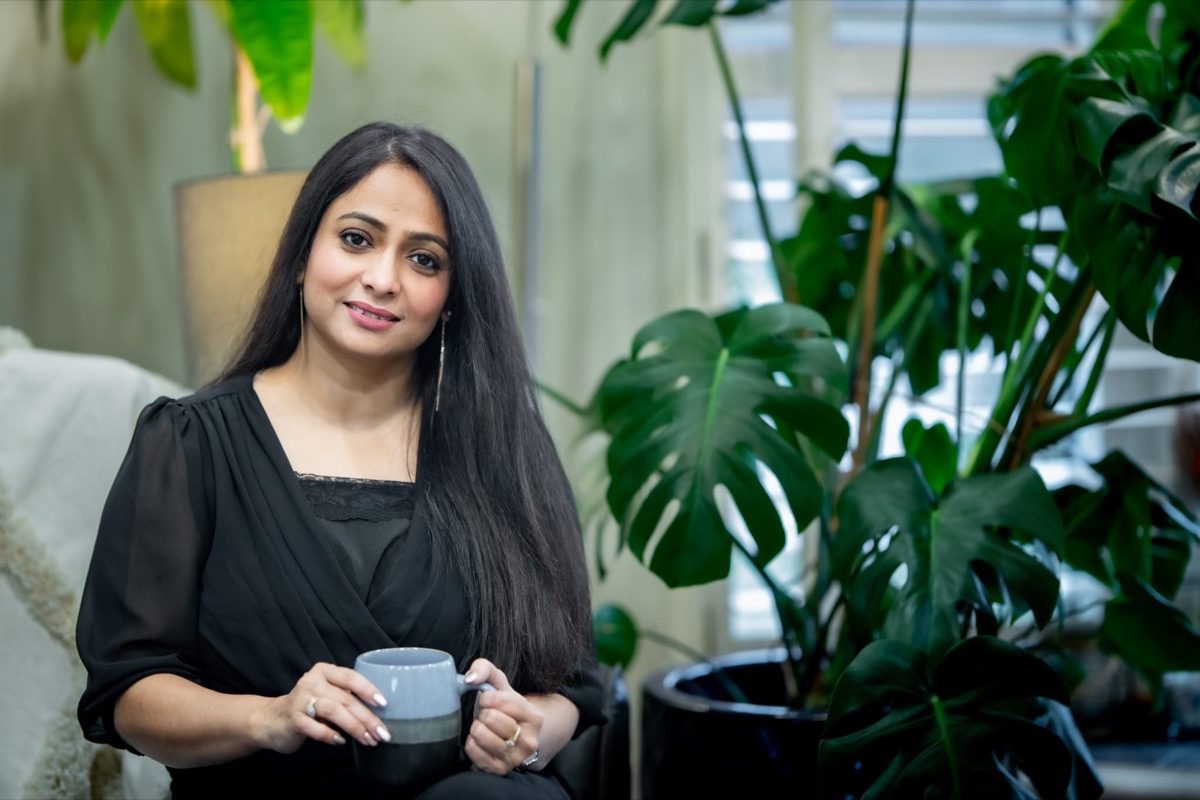
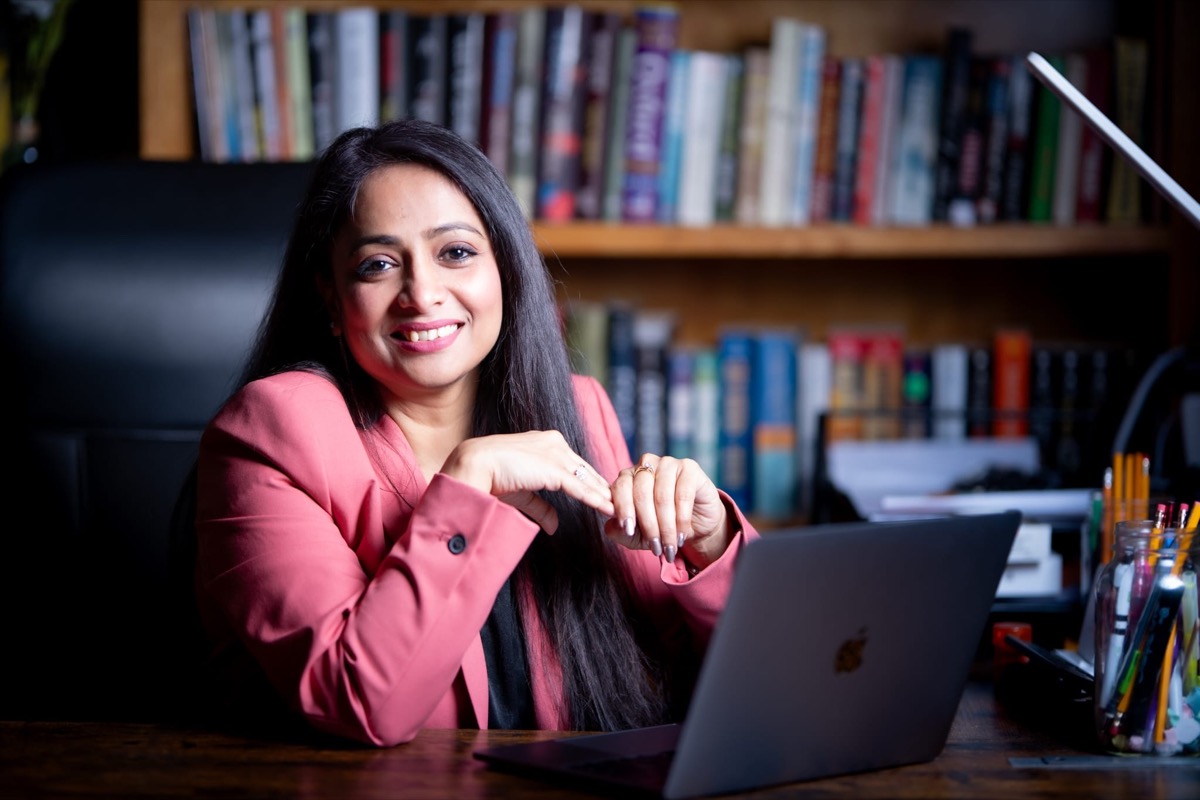
I'm Syeda Zohora, a Registered Psychotherapist (Qualifying) who grew up in Bangladesh and spoke Bengali every day for more than 30 years before I came to Canada. I offer sessions in Bengali or English, in person in Whitby or virtually anywhere in Ontario.
Bengali-speaking therapists in Canada are genuinely scarce. I'm not aware of another Registered Psychotherapist in Ontario who grew up in Bangladesh, spoke Bengali as a first language for three decades, and then immigrated as an adult. That specificity matters because the cultural context Bengali carries isn't something you can approximate. It's built into the rhythm of the language, into the words Bengali uses for obligation and shame and the particular grief of distance from family, and into the things that go unsaid because they've never needed saying.
There's a particular kind of exhaustion that comes from describing your inner life in your second language. You reach for the closest English word and accept it, even when it doesn't quite fit. That small compromise, repeated across every session, means you're always working with a slightly imprecise version of yourself. Bengali has registers of formality and intimacy that English doesn't map onto cleanly. The word you'd use to describe the weight your mother's silence carries, the phrase that captures what it feels like to disappoint a family that sacrificed to bring you here , these live in Bengali, not in a translation of it.
I grew up in Dhaka. My family's expectations, the social structures I navigated as a woman, the specific texture of South Asian family dynamics , I didn't learn about these from a training manual. I lived inside them for most of my life. So when a client starts to describe something that would take ten minutes to explain to a non-Bengali therapist, I already understand the shape of it. That doesn't mean I assume your experience is the same as mine. It means you don't have to spend the first twenty minutes of every session building context before you can get to the actual thing you came to talk about.
Sessions can be conducted entirely in Bengali, entirely in English, or in a natural mix of both. Many clients find that certain memories or feelings come most accurately in Bengali, particularly those that formed in childhood or within the family. Others prefer English for their day-to-day life concerns or for topics that developed after immigration. There's no rule. The language that lets you say the thing most precisely is the right one to use.
I'm a Registered Psychotherapist (Qualifying), Licence #19673, with an MA in Counselling Psychology from Yorkville University (2025) and a Diploma in Behavioural Science from Seneca College (2022). I'm a member of the Canadian Counselling and Psychotherapy Association. My practice draws on CBT, Emotionally Focused Therapy, Internal Family Systems, DBT, psychodynamic approaches, narrative therapy, and mindfulness integration.
I was born and raised in Bangladesh. I lived there for more than 30 years, raised in the specific social world that shapes Bengali women: family expectation, community scrutiny, the particular silence around mental health, the way emotional pain tends to be named in physical terms. I immigrated to Canada as a single mother and built a new life here while carrying all of that with me. The experience of holding two cultural realities at once isn't something I studied in a textbook. It's what I've done every day since I arrived.
I practice under supervision, as required at the Qualifying stage of registration. This is a college regulatory requirement that ensures ongoing accountability, not a signal of limited capacity. I work with individuals and couples on anxiety, depression, trauma, relationship difficulties, burnout, and the particular challenges that arrive at life transitions. You can read more about my full approach on the about page .
I grew up in Bangladesh speaking Bengali as my first language. My understanding of Bangladeshi family structures, social expectations, and the emotional vocabulary Bengali carries comes from 30+ years of living inside them. No cultural competency training produces this. It's specific to where I'm from, and I'm the only person who can claim it from exactly this position.
I immigrated to Canada as a single mother after more than three decades in South Asia. I know what it costs to rebuild yourself in a country that doesn't yet know your name. The grief of displacement, the pressure of parenting across cultures, and the specific strain of holding a family together without a community around you , I bring that knowledge to sessions not as a studied framework but as personal history.
I hold Licence #19673 as a Registered Psychotherapist (Qualifying) with the College of Registered Psychotherapists of Ontario. Practising under supervision at this stage is a regulatory requirement that all Qualifying members follow. It means my work is subject to professional oversight and ongoing review, which is a structure that protects clients. My MA in Counselling Psychology from Yorkville University (2025) and my Diploma in Behavioural Science from Seneca College (2022) form the academic foundation of my practice.
about pageIn-person sessions take place at 519 Dundas Street East in Whitby, Ontario. Virtual sessions by video or phone are available to clients anywhere in Ontario. Given how few Bengali-speaking therapists practice in Canada, I know that the people searching for this kind of support aren't only in the Durham Region , they're in Scarborough, Mississauga, Ottawa, Hamilton, and beyond. The virtual format makes it possible to work together regardless of where you are in the province.
The mental health professions in Canada have historically been trained within a Western, predominantly English-language framework. The pipeline from South Asian communities into psychotherapy has been slow to develop, partly because of cultural stigma around seeking help and partly because postgraduate clinical training is a long and expensive path. The result is that Bengali-speaking Canadians , a population that includes hundreds of thousands of people across Ontario alone , have very few therapists who speak their language and fewer still who share their cultural background in any substantive way. The shortage is real, and it has practical consequences for the quality of care available to this community.
It removes a layer of translation that most people don't realise they're doing. In a second language, you choose words that are close to what you mean rather than words that are exactly what you mean. Over time that imprecision shapes what gets explored and what stays out of reach. The emotional vocabulary of a first language is also more embodied , the words carry more feeling because they were learned alongside the experiences they describe. People often find that certain memories are only accessible in the language they were formed in. Working in Bengali means those memories are reachable without the detour.
It means that the therapist already holds the context that shapes your emotional life. For Bengali and Bangladeshi clients, that context includes: the weight of family honour and what it costs to disappoint people who sacrificed for you; the particular dynamic between generations in South Asian households; the way emotional distress is often expressed physically or not expressed at all; and the specific loneliness of immigration, where the community that gave you your sense of self is now thousands of miles away. A therapist who shares that background doesn't need it explained. That saves time, and it also means the therapy can go deeper faster.
Several things compound. First, stigma in the community means that seeking therapy is still seen by many families as an admission of failure rather than a practical act of self-care. Second, the scarcity of Bengali-speaking therapists means that even people who want help often settle for therapists with no shared language or cultural knowledge. Third, many therapy models were developed in Western contexts and assume a degree of individualism , "what do you want for yourself?" , that sits awkwardly against a Bengali framework where the self is deeply embedded in family and community. Finding a therapist who holds both the clinical training and the cultural fluency to work inside that framework is genuinely difficult.
The difference is the difference between knowing a place on a map and having grown up on that street. A therapist who has studied South Asian culture , through coursework, workshops, or clinical training in cultural competency , has gained a conceptual framework. They know the categories. A therapist who grew up in Bangladesh, lived inside a Bengali family, spoke the language every day, and then immigrated as an adult has something that can't be taught: the feeling from the inside of what those categories actually contain. I'm in the second group. That's a specific claim, and it's one I can back up: I was born in Bangladesh, I lived there for more than 30 years, and I speak Bengali as my first language.
Languages structure emotional experience differently. Bengali has words for emotional states that have no direct English equivalent , and the reverse is also true. When you translate an emotion, you're not just finding a synonym; you're fitting it into a different conceptual framework. In Bengali, many emotional experiences are described in relational terms , in relation to family, to duty, to what others think , in a way that English tends to individualise. The shame of falling short of your family's expectations feels different in the language your family actually used to communicate those expectations. Working in that original language keeps the emotional experience intact rather than reframing it through translation.
Anyone for whom language and cultural background are a significant part of their experience , which, for most Bengali and Bangladeshi-Canadian people, they are. This includes first-generation immigrants working through the losses and pressures of displacement; second-generation Canadians navigating the gap between their parents' world and the one they've grown up in; women managing expectations that were formed in Bangladesh and now sit uncomfortably alongside the life they're building in Canada; and anyone who has tried therapy in English and felt something important wasn't quite reaching the surface. Sessions are available in Bengali, English, or both, depending on what feels right for the work.
"Finding a therapist who speaks Bengali and actually understands what that means culturally is harder than it sounds. I spent years putting this off because I didn't think I'd find someone who got it. Within a few sessions I was covering things I hadn't been able to talk about in English. I recommend Syeda to anyone in the Bengali community who's been sitting on this."
"I'd tried two other therapists before this. Syeda is the first one where I felt like we were actually getting somewhere rather than just talking around things. Three months in, I sleep better than I have in years. The online sessions worked out much better than I expected."
"I came in thinking I needed to talk about my relationship. What we actually worked on turned out to be older than that. Six weeks in, things had already shifted. Syeda doesn't rush you but she also doesn't let you go in circles. I hadn't expected to feel any different this quickly."
I'm a Registered Psychotherapist (Qualifying) who grew up in Bangladesh and speaks Bengali as a first language. Sessions in Bengali or English, in person in Whitby or virtually anywhere in Ontario. The first 15 minutes are free.