I'm a Registered Psychotherapist (Qualifying), Licence #19673, with an MA in Counselling Psychology from Yorkville University. On this page I explain exactly which approaches I use, what they look like in practice, and what you'll pay.
Cognitive Behavioural Therapy, or CBT, is the approach most people have heard of. It starts with a simple observation: the way you interpret a situation shapes how you feel about it, and how you feel shapes what you do. When those interpretations are consistently harsh, catastrophic, or distorted, they generate real distress even when circumstances are manageable. In sessions, CBT means working together to catch those patterns as they happen, examine the evidence for and against them, and build more accurate and flexible ways of thinking. It's structured, it's practical, and it tends to produce noticeable change relatively quickly. I find it particularly useful for anxiety, low mood, sleep difficulties, and the kind of self-critical thinking that has been running quietly in the background for years.
Emotionally Focused Therapy, or EFT, works at a different level. Rather than focusing primarily on thoughts, it goes to the emotional experience underneath them, and particularly to how early attachment relationships have shaped the way you connect with others and with yourself. If you grew up in a family where emotional needs were consistently unmet, dismissed, or punished, you learned to manage those needs in ways that made sense then but cause problems now. Those patterns show up in adult relationships as cycles of distance, conflict, over-functioning, or shutdown. In couples work, EFT helps both people understand what's actually driving the cycle rather than just arguing about the surface content. In individual work, it helps you access and process emotions that have been pushed down for a long time.
Internal Family Systems, or IFS, is built on the idea that the mind isn't a single unified voice. It's a collection of different parts, each carrying its own perspective, motivation, and history. You might recognise this from moments when part of you wants to set a boundary and another part insists you can't. The inner critic that sounds nothing like how you'd speak to a friend. The part that shuts down completely under pressure. In IFS, we don't try to silence or override these parts. We get curious about them. Often the parts that cause the most trouble are protecting something, usually an older wound. IFS is particularly useful for trauma, complex self-criticism, and for anyone who has tried to change a pattern by willpower alone and found it doesn't work.
Dialectical Behaviour Therapy, or DBT, developed originally from CBT and was designed specifically for people experiencing intense emotional swings, difficulty in relationships, and urges toward self-harm. At its core, it holds two things together at once: you're doing the best you can given your history, and you also need to build new skills to change your experience. DBT offers concrete tools for managing overwhelming emotions, tolerating distress without making it worse, communicating more effectively, and building a life that feels worth living. I draw on DBT skills work particularly with clients navigating emotional intensity, borderline patterns, or chronic feelings of emptiness. All of these approaches sit alongside psychodynamic, narrative, solution-focused, and trauma-focused work. I integrate mindfulness throughout, and I always begin from a person-centred foundation, which means I follow your lead on what matters and what pace feels right.
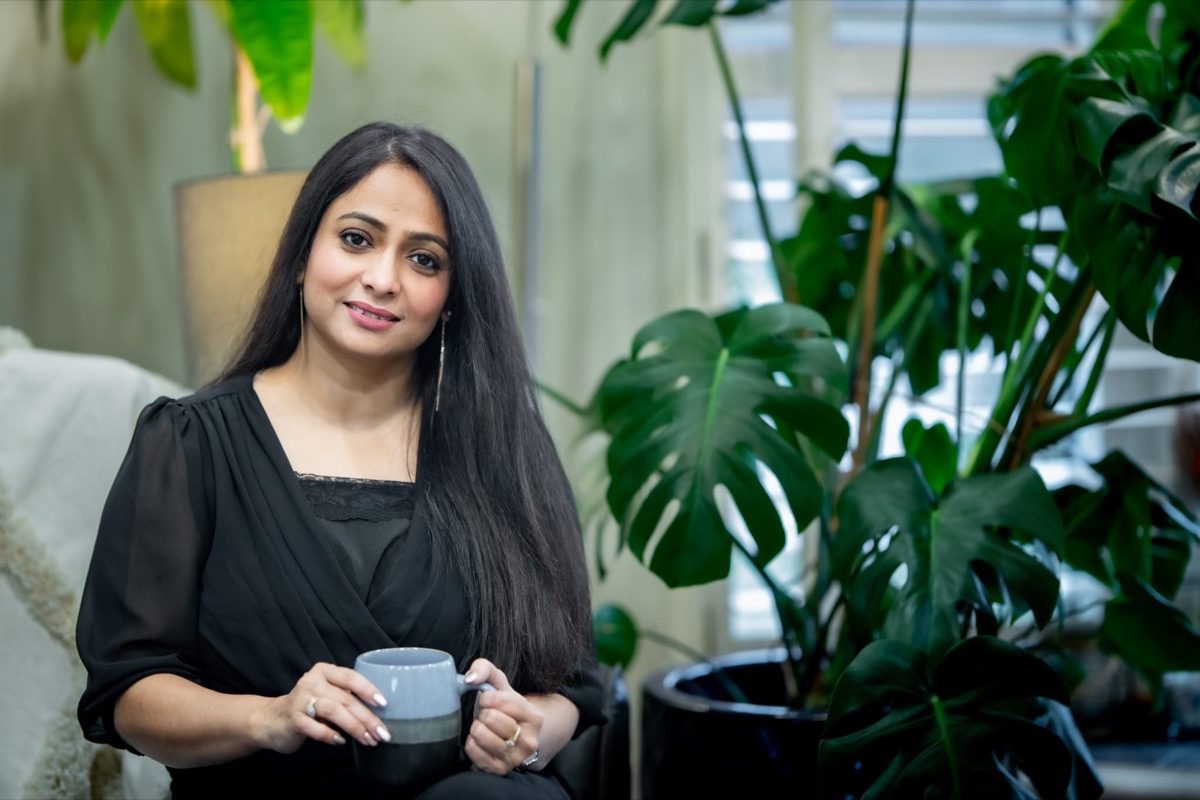
Sessions are 50 minutes. I offer in-person appointments at 519 Dundas Street East in Whitby, Ontario, Monday through Friday, and virtually by video or phone to clients anywhere in Canada. Virtual sessions work exactly as well as in-person ones for most presenting concerns, and for many people they're actually more consistent because there's no commute, no parking, and no need to arrange childcare or take time off work. I've done this work with clients calling from Scarborough, from Ajax, from smaller towns across Ontario, and from provinces well outside the Durham Region. The format doesn't determine the quality of the work.
Before booking a first session, I offer a free 15-minute consultation. It's a phone or video call, and it's genuinely pressure-free. You can ask whatever you need to ask about how I work, my background, my fees, or anything else. I'll ask a few questions about what's brought you to therapy so I can tell you whether I think I can be useful to you. If I don't think I'm the right fit, I'll say so clearly. The consultation exists because starting therapy is a significant decision, and you deserve enough information to make it well.
I speak English, Bengali, and Hindi. For South Asian clients who've struggled to find a therapist who understands the specific pressures of family structure, immigration, intergenerational expectation, and cultural identity, that matters. I grew up in Bangladesh, lived there for more than thirty years, and immigrated to Canada as a single mother. The things I've worked through personally, including rebuilding a life in a new country while raising a child alone, aren't background details. They inform how I listen, what I notice, and what I understand without needing it explained.
Sessions are $150 per hour for both individual therapy and couples therapy. I keep the pricing consistent across both because couples work requires the same preparation, training, and attention as individual sessions. Payment is due at the time of each session. I don't direct-bill insurance providers, but I'll give you an official receipt after every appointment that you can submit to your extended health benefits plan. Many plans cover Registered Psychotherapists, so it's worth checking with your insurer before we begin. If you have questions about fees or sliding scale availability, the free consultation is the right time to ask.
You probably don't, and that's fine. Most people have no training in therapy models and shouldn't need to arrive with a preference. What matters is that you can tell me what's been hard, what you've already tried, and what you're hoping might be different. From there, I'll suggest the approaches most likely to be useful given your specific situation. We'll adjust as we learn what's actually landing for you.
EFT is a structured approach developed by Dr. Sue Johnson that works with emotional experience and attachment. In couples work, it helps both people identify the negative cycle they're stuck in, understand what's driving it emotionally, and shift from reactive conflict to genuine connection. In individual work, it helps you access emotions that have been suppressed and process experiences that have stayed stuck. It's especially useful when someone knows logically that a situation has resolved but still carries its emotional weight.
IFS was developed by Dr. Richard Schwartz and is built on the idea that the psyche is made up of distinct parts, each with its own voice, role, and history. Some parts protect you, sometimes at significant cost. Others carry old pain. The goal in IFS isn't to eliminate difficult parts but to understand what they're doing and why. It's particularly useful for trauma survivors, people with strong inner critics, and anyone who has found that knowing what they should do differently hasn't been enough to actually change.
For most concerns, yes. Research comparing in-person and online psychotherapy consistently shows comparable outcomes for anxiety, depression, trauma, and relationship difficulties. The factors that predict whether therapy works, including the quality of the therapeutic relationship, consistency of attendance, and engagement between sessions, are present in both formats. Some people find the slight physical distance of a video call actually makes it easier to speak about difficult things. If you're uncertain, the free consultation is a good opportunity to get a sense of how the format feels.
The first session is primarily a conversation. I'll ask about what's brought you to therapy, your history, and what you're hoping for. You won't be expected to have things perfectly articulated or to dive into the most difficult material immediately. I'm trying to understand your situation well enough to be genuinely useful, not to complete an intake form. By the end of the session, we'll have a clearer picture of what the work might involve and what approach seems most relevant to where you are right now.
Progress in therapy isn't always linear. Some sessions will feel productive and others will feel like you've stalled. Over time, the clearest signs that therapy is working include noticing your patterns earlier, responding to difficult situations with more flexibility, feeling less controlled by particular emotions or thoughts, and finding that the thing that brought you to therapy occupies less of your mental space. I check in regularly about how the work is feeling for you, and I'd rather you tell me if something isn't useful than quietly tolerate an approach that isn't landing.
It depends on what you're working on and how you respond to the work. For a specific, bounded concern like exam anxiety or adjustment to a particular life change, several months of weekly sessions is often sufficient. For longer-standing patterns, trauma, or complex relational difficulties, the work typically takes longer. I don't set arbitrary end dates. We review progress together and you'll always be part of the conversation about when you're ready to reduce frequency or finish. What I can say is that most people notice something shifting within the first few sessions, even when the deeper work takes longer.
My Whitby office is at 519 Dundas Street East, and I offer in-person sessions there for clients in the Durham Region and surrounding areas. Virtually, I work with clients across Ontario and Canada-wide. If you're in Oshawa, Ajax, Pickering, Bowmanville, or Scarborough, I'm a practical distance for in-person sessions and available online the same day.
"Finding a therapist who speaks Bengali and actually understands what that means culturally is harder than it sounds. I spent years putting this off because I didn't think I'd find someone who got it. Within a few sessions I was covering things I hadn't been able to talk about in English. I recommend Syeda to anyone in the Bengali community who's been sitting on this."
"I'd tried two other therapists before this. Syeda is the first one where I felt like we were actually getting somewhere rather than just talking around things. Three months in, I sleep better than I have in years. The online sessions worked out much better than I expected."
"I came in thinking I needed to talk about my relationship. What we actually worked on turned out to be older than that. Six weeks in, things had already shifted. Syeda doesn't rush you but she also doesn't let you go in circles. I hadn't expected to feel any different this quickly."
I draw from several evidence-based approaches: Cognitive Behavioural Therapy, Emotionally Focused Therapy, Internal Family Systems, Dialectical Behaviour Therapy, Psychodynamic therapy, Narrative therapy, and Solution-Focused therapy. I also work with trauma-focused approaches and integrate mindfulness throughout. Person-centred principles run underneath all of it, which means the relationship we build is central rather than incidental.
I don't apply a single model rigidly. I pay attention to what's actually happening for you, what your history is, and what kind of support seems useful, then adjust accordingly. Some people benefit most from structured skill-building work. Others need space to explore the emotional patterns that have been driving their distress for years. Many need both, at different points in the process.
CBT focuses on the connection between your thoughts, feelings, and behaviours. If you're stuck in cycles of anxious thinking, low mood, or avoidance, CBT gives you practical tools to identify those patterns and respond differently. It's structured and tends to show results relatively quickly.
Emotionally Focused Therapy centres on emotional experience and attachment patterns. It's particularly useful in couples work and for individuals who notice they struggle with emotional disconnection, closeness, or trust. EFT asks what's happening underneath a reaction, not just what the reaction is. If you find yourself shutting down or escalating in relationships without fully understanding why, EFT is often where the answer lives.
Internal Family Systems treats the mind as made up of different parts, each with its own perspective and history. You might recognise this from moments when one part of you wants to set a boundary and another part insists you can't. In IFS, we get curious about those parts rather than trying to override them. It's especially useful for trauma, deep self-criticism, and patterns that haven't shifted despite genuine effort to change them.
Sessions are 50 minutes. For most people, weekly sessions work best at the start, particularly when you're dealing with something active and difficult. A recent crisis, a major life transition, or symptoms that are significantly affecting your daily functioning all tend to benefit from weekly contact while you're building skills and momentum.
As things settle, we can shift to every two weeks if that suits your schedule and finances better. Frequency isn't a fixed prescription. It's something we talk about together, based on what you're working on and how you're responding. I'd rather you come consistently at a pace you can sustain than intensively for a few months and then stop altogether because it became too much. There's no rule that says more is always better. What matters is that you show up and that the work between sessions has room to settle.
Both options are available. I offer in-person sessions at 519 Dundas Street East in Whitby, Ontario. If you're in the Durham Region and value having a dedicated space away from home and work, in-person is a good fit. My hours are Monday, Tuesday, Thursday, and Friday from 3 to 9pm, and Wednesday from 12 to 5pm.
Virtual sessions run by video or phone and are available to anyone in Canada. I work with clients across Ontario and beyond. The clinical evidence is clear that virtual therapy is genuinely effective for most presenting concerns, and for many people the format is more practical than in-person. No commute, no parking, no need to arrange childcare. For Bengali and Hindi-speaking clients living anywhere in Canada, virtual sessions mean geography is no longer the reason you can't access a therapist who actually understands your cultural context.
Sessions are $150 per hour for both individual and couples therapy. Payment is due at the time of each session. I accept cash, cheque, Visa, Mastercard, and PayPal.
I don't direct-bill insurance providers, but I give you an official receipt after every session that includes my name, licence number, credential, date of service, and amount paid. You can submit that receipt to your extended health benefits plan for reimbursement. Coverage varies by plan, so I'd encourage you to check with your insurer before we begin and ask specifically whether your plan covers sessions with a Registered Psychotherapist (Qualifying). If you have questions about fees before booking, the free 15-minute consultation is the right time to raise them.
I don't direct-bill insurance companies. You pay for sessions directly and I provide an official receipt after each appointment. That receipt includes my full name, Licence #19673, my credential as a Registered Psychotherapist (Qualifying), the date of service, and the amount paid. You submit this to your extended health benefits provider for reimbursement.
Coverage varies considerably by plan. Some extended health plans cover Registered Psychotherapists explicitly. Others cover only psychologists or social workers. Before your first session, I'd recommend calling your insurer and asking specifically whether your plan covers services provided by a Registered Psychotherapist (Qualifying) under mental health benefits. I'm happy to answer any questions about my credentials that might help with that conversation. If your insurer asks whether I'm a member of a professional association, I'm a member of the Canadian Counselling and Psychotherapy Association.
Yes. I keep a small number of sliding scale spots available at $135 per hour for clients who are genuinely unable to afford the standard rate. These spots are limited. I need to sustain my practice in order to keep seeing clients at all, which means I can't offer reduced fees universally. But I also believe that financial hardship shouldn't categorically prevent someone from accessing support.
If cost is a real barrier for you, please mention it during the free consultation and we can have an honest conversation about what's possible. I ask that you be straightforward with me. I'd rather talk about it plainly than have cost be the reason you don't come back after the first session. For clients who want to support broader access, I also offer a pay-it-forward rate of $165 per hour. That contribution helps offset the cost of sliding scale spots.
The free consultation is a 15-minute phone or video call. It's genuinely free with no obligation attached. It exists so you can get a real sense of how I work, ask questions about my approach or fees, and decide whether you'd like to book a first session. I'll ask a few questions about what's brought you to therapy so I can tell you honestly whether I think I'm a good fit for what you're dealing with. If I don't think I can help you well, I'll say so and point you somewhere more appropriate.
You're not committing to anything by booking the consultation. Many people find it useful just to have 15 minutes with an actual therapist rather than reading websites and trying to guess from a bio. The call is low-stakes and useful. Book it and see how the conversation feels.
I'm a Registered Psychotherapist (Qualifying), Licence #19673, with an MA in Counselling Psychology and more than thirty years of lived experience in Bangladesh before immigrating to Canada as a single mother. I work in English, Bengali, and Hindi, in person in Whitby and virtually across Canada. If you'd like to understand how I work before committing to a first session, book the free consultation and we'll talk.