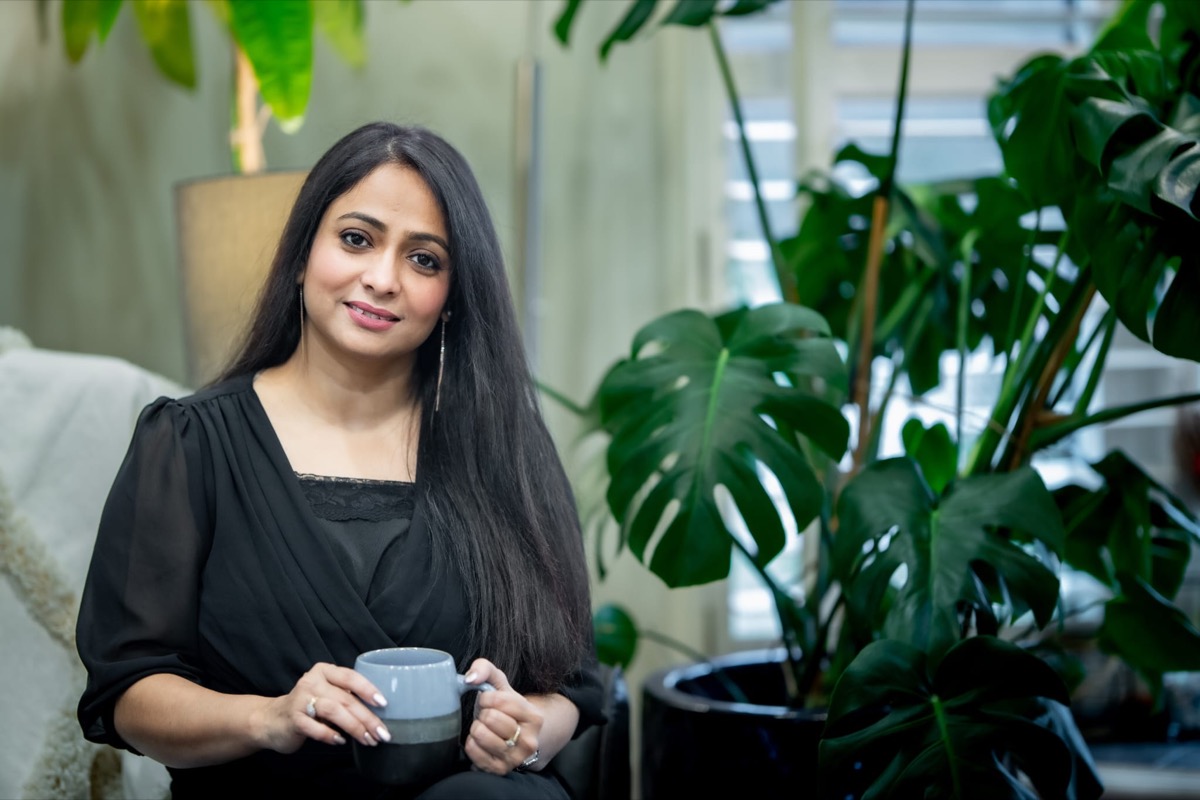
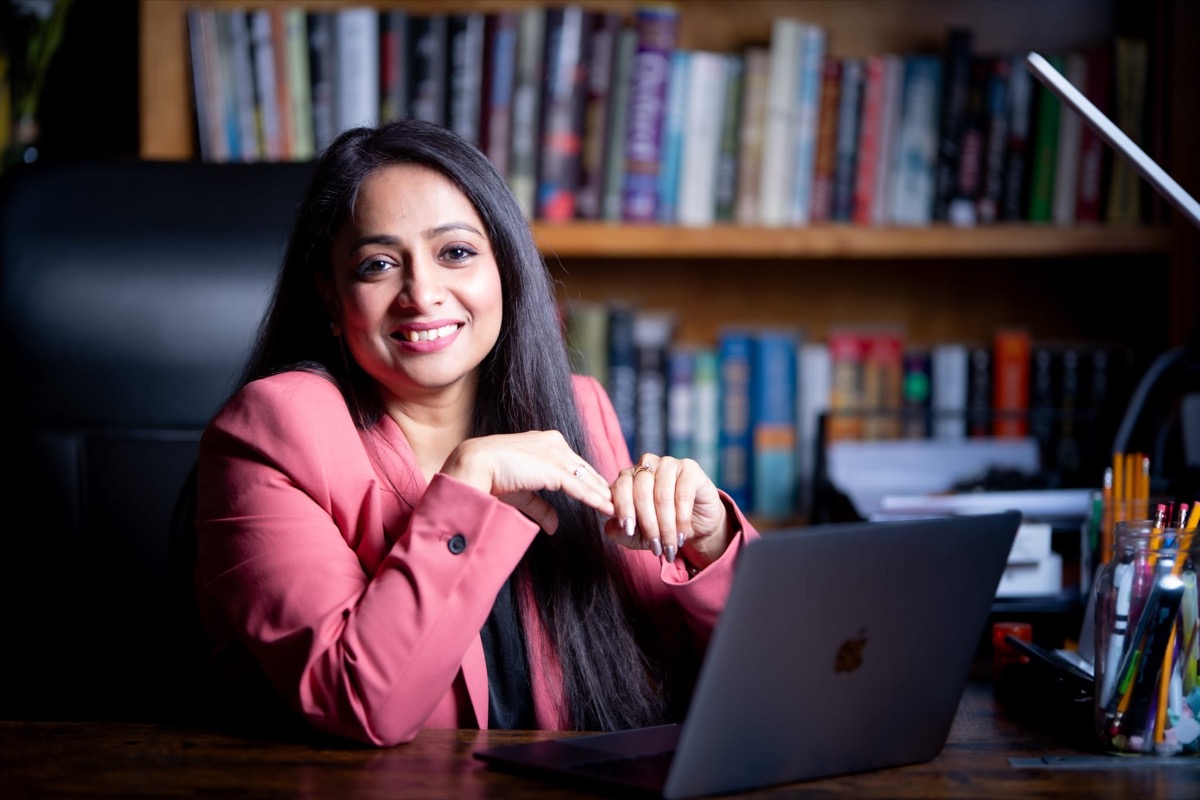
I'm Syeda Zohora, a Registered Psychotherapist (Qualifying). I grew up in Bangladesh, and I offer sessions in Bengali and English, in person in Whitby and by video or phone anywhere in Canada.
I grew up in Bangladesh, and the way I learned to understand people, families and relationships was shaped by that before I met any Western framework. I already hold the reference points a Bangladeshi client may carry silently into a session.
Some things are straightforward to say in Bengali and need careful reconstruction in English: the guilt within a Bangladeshi family, the pressure of being the child who moved abroad, the way emotional experience gets described in terms of the body. That is the vocabulary I grew up using. When a client switches into Bengali mid-sentence because that's the only way to say the thing, I follow.
I lived in South Asia for more than 30 years before immigrating to Canada, where I became a single mother. The grief, the administrative overload, and the low-level pressure of being somewhere you didn't grow up are things I know from my own life.
I'm a Registered Psychotherapist (Qualifying), Licence #19673, with an MA in Counselling Psychology from Yorkville University (2025) and a Diploma in Behavioural Science from Seneca College (2022). I'm a member of the Canadian Counselling and Psychotherapy Association. I use CBT, Emotionally Focused Therapy, Internal Family Systems, DBT, psychodynamic and narrative approaches, solution-focused therapy, trauma-focused work, and mindfulness. The College requires practice under supervision at the Qualifying stage. I practise under a supervisor.
I speak Bengali and offer sessions in Bengali, English, or both, whichever a client finds most natural. I see clients in person at 519 Dundas Street East, Whitby, Ontario, and by video or phone across Canada. A free 15-minute consultation is available by phone or video.
Read more about my background and approach.Persistent worry, physical tension, and the particular anxiety that comes with living between two cultural worlds and never feeling entirely settled in either.
Low mood, withdrawal, and the grief that can sit under a life that looks fine from the outside, especially when you're expected to be grateful.
Past experiences that continue to shape the present, including those connected to family violence, displacement, loss, or the specific ruptures that come with migration.
Relationship strain when two people are adapting to Canada at different speeds, or hold different levels of attachment to the culture they came from.
The exhaustion of working full time, managing family expectations from two countries, and carrying the pressure of being the one who made it abroad.
I see clients in person at 519 Dundas Street East, Whitby, Ontario. For anyone elsewhere in Canada, virtual sessions by video or phone are available in my regular hours.
Partition, the Liberation War and the language movement shape how Bangladeshi people understand identity, sacrifice and belonging, and that history is distinct from the Indian or Pakistani one. The family obligation Bangladeshi immigrants carry, the pressure to justify what was left behind by succeeding visibly here, and the grief of distance from a country that changes faster than memory keeps up with: these are not identical to what a Punjabi or Tamil client might describe. I know the Bangladeshi version from the inside.
You're often managing two sets of expectations that don't fit together. At work or in public, you're expected to show competence, independence and adaptability. At home or in the community, loyalty, deference and continuity. The strain between them builds. The exhaustion comes from the constant switching, and from having nowhere both halves can be spoken about without judgment or translation.
Family obligation in a Bangladeshi context is a practical system of expectation and reciprocity that governs decisions about money, marriage, career, housing and time. Honour is collective. One person's choices carry implications for the whole family's standing. Decisions a Western framework treats as personal carry the added weight of what they signal about the family. Asking for help, setting limits with parents, ending a marriage, or choosing a career that doesn't match parental ambition can all become sources of shame that are hard to bring to a therapist who doesn't understand why those things matter.
Sessions with a therapist who doesn't share your background often involve some briefing: why a family dynamic works the way it does, why a certain response to a parent isn't unusual, why a personal limit functions differently in your family. When the therapist already holds that context, the session starts closer to what needs attention.
I work with individuals and couples: Bangladeshi-Canadians, first or second generation, carrying some combination of immigration stress, family obligation, identity questions, anxiety, depression or relationship strain; and people who came to Canada from Bangladesh later in life and are still making sense of that move. Sessions are in Bengali, English, or both. If you're South Asian but not Bangladeshi, my South Asian therapy page may fit better.
Yes. Bangladesh is where I grew up, and I was in South Asia for more than 30 years before I immigrated to Canada. I speak Bengali.
Yes. For many people, feelings, memories and family dynamics are easier to describe in the language they were first experienced in. If you grew up in Bangladesh with Bengali at home, the words for particular kinds of shame, obligation, love or grief belong to that language. Sessions can be entirely in Bengali, entirely in English, or a mix, depending on what feels accurate in the moment. Moving between languages mid-session is fine.
I work with concerns that come up for Bangladeshi-Canadian clients: anxiety and depression shaped by immigration and adjustment, the pressure of carrying family expectations across a migration, grief for a homeland and a version of yourself that existed there, conflict between the values you were raised with and the expectations of life in Canada, the weight of being the eldest child or the one who moved abroad, marriages where both partners are adapting to Canada at different speeds, and the exhaustion of being a cultural translator in every setting you enter. I also work with trauma, burnout, identity questions and relationship difficulties that aren't specific to any culture.
Both. I see clients in person at 519 Dundas Street East, Whitby, Ontario. For clients elsewhere in Canada, I offer virtual sessions by video or phone.
Yes. I see clients by video or phone across Canada. The Bengali language option is available wherever you live.
No one needs to explain to me what every Bangladeshi person already knows: the structure of a Bangladeshi family, the weight of honour and obligation, what it costs to leave, and the pull between gratitude and resentment toward the country you came from. I immigrated, and I became a single mother in Canada. My MA in Counselling Psychology from Yorkville University (2025) provides the clinical framework, and my background provides the context.
Individual and couples sessions are $150 per hour. I also offer a sliding scale rate of $135 per hour for clients who need it. If cost is a concern, please mention it when we speak and we can work something out. The 15-minute consultation is free.
Start with the free 15-minute consultation, through the contact page or by phone. You can ask questions, tell me what's brought you here, and decide whether to go ahead. If you're ready to book a full session, the contact page works for that too. Sessions are Monday, Tuesday, Thursday and Friday from 3pm to 9pm, and Wednesday from 12pm to 5pm, by video or phone across Canada or in person at 519 Dundas Street East, Whitby, Ontario.
I grew up in Bangladesh, and I offer sessions in Bengali and English, in person in Whitby and by video or phone across Canada. The 15-minute consultation is free.